
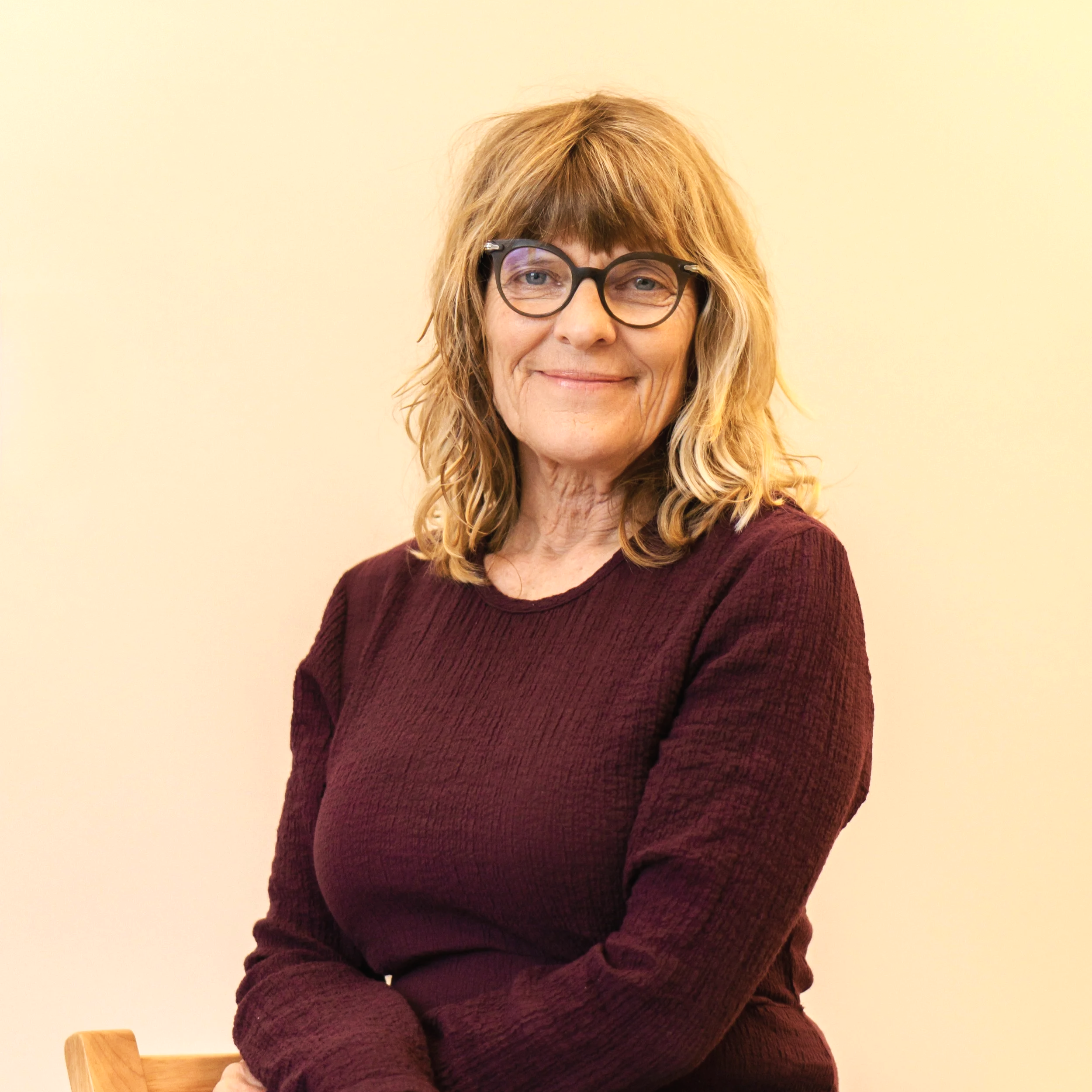

I’m a Registered Clinical Psychologist with a PhD in psychology.
I have 25 years of clinical experience working with clients presenting with a range of issues. I now work primarily with clients who feel stuck in repetitive patterns of behaviour of overeating and eating when not hungry. I also work with clients interested in changing their pattern of alcohol use.
Overcoming overeating:
I work with clients who are experiencing difficulties with over-eating, also referred to as emotional eating or compulsive eating. This is a pattern of eating when we’re not physically hungry that feels problematic and causes us to feel increasingly preoccupied with food. This is often tied up with worry about the size and shape of our bodies. A concern that is produced and fuelled by the dominant culture we live in.
I provide online therapy for individual clients. Sessions run for 50 minutes.
I offer a 10 hour, self-paced online psycho-educational course which sets out the fundamentals of this approach with guided practical steps towards change.
I provide online psycho-educational groups for 2-4 participants.
I provide training for counselling and psychotherapy students, training and mentoring for other health professionals working in this area and lectures/presentations for groups and organisations.
We start with the understanding that behaviours makes sense. As painful as some patterns of behaviour are they serve a purpose. And change is possible.
This is a non-diet approach. The key premise is that going to food when we are not physically hungry is not an eating problem. It is a calming problem.
At some time in our lives we learned to use food in an attempt to manage difficult emotions because this helped us in some way. And then we kept doing it. While we were on that path, there were a whole range of other behaviours that we were not learning. Learning new behaviours now, that are more effective in managing difficult emotions and situations, leads to a shift away from leaning on food.
The therapeutic work includes identifying what makes us reach for food when we are not hungry. We each have our own unique history so this will be different for each of us.
Becoming curious about why we eat when we’re not hungry is the starting point. Our curiosity, not self-blame, gets us usefully engaged in making sense of why we lean on food when we’re in trouble emotionally and what we might do instead. We can develop a greater sense of agency and choice in how we relate to ourselves and respond to the world around us.
Changing patterns of alcohol use:
Clients who experience themselves as caught in a repetitive pattern of behaviour with alcohol often come to therapy because they feel their alcohol use is no longer enjoyable and/or has become problematic for them in some way. In the non-judgemental, non-punitive context of therapy there is time and space to make sense of patterns of alcohol use and to think about, and make changes, in this area of our lives. This work may lead to clients choosing to reduce their alcohol intake or to stop drinking altogether. There is no one size fits all, no one ‘solution,’ as each client is unique with their own particular history and life circumstances.
I provide online therapy for individual clients who are interested in looking at their alcohol use. Sessions run for 50 minutes.


Individual Clients: $220 (inc. GST) for a 50-minute online session
Psycho-educational groups of 2-4 participants: To be negotiated
Supervision: To be negotiated
My client days are Mondays, Tuesdays and Wednesdays. To discuss making an appointment you can contact me by:
phone: 021 194 8885
email: sylviablood@outlook.co.nz
If there is no answer when you call, please leave a voicemail message and I will respond as soon as I am able.
Cancellation: If you need to cancel an appointment, please provide at least 24-hours notice. Sessions not attended or cancelled within 24 hours incur the full fee. Non-paid invoices may be subject to debt collection and incur associated costs.
NB: Please note I cannot offer an after-hours, immediate response or crisis service. If you are concerned for your own or any other person’s safety, you should contact the emergency services (dial 111) or use one of the crisis services listed on the following web page: http://www.mentalhealth.org.nz/get-help/in-crisis/
